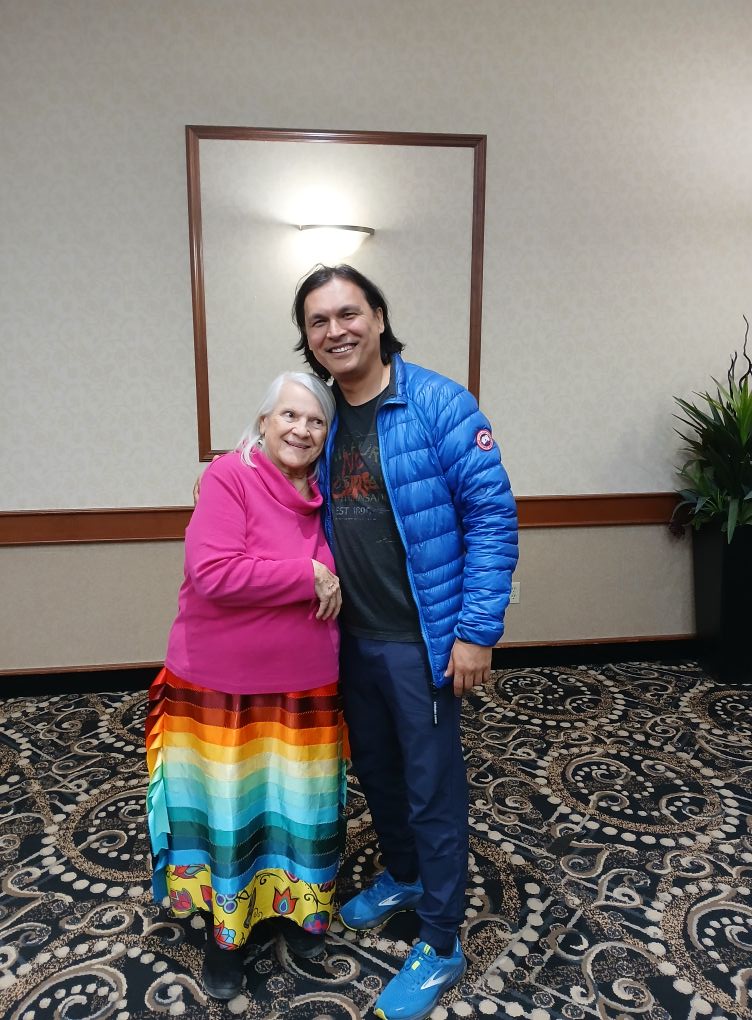
Keeping the Words Alive: Katie Whitford on Anishinaabe Language Preservation
May 4, 2026
At Anishinaabe Pimadiziwin Inc., language is more than communication- it is identity, memory, worldview, and connection.
For respected Language Keeper Katie Whitford (Sandy Bay First Nation,) protecting Anishinaabemowin has become a lifelong commitment grounded in love for community and responsibility to future generations.
A fluent speaker, teacher, and fierce advocate for language revitalization, Katie has spent years ensuring that Anishinaabe words, teachings, and ways of understanding are not lost, but carried forward.
Through her work with API, Katie has led lunchtime Ojibwe language circles and family-focused language programming that create welcoming spaces for learners of all ages to reconnect with Anishinaabemowin in meaningful, everyday ways.
Whether sharing foundational vocabulary, stories behind the words, or the deeper cultural teachings embedded within the language itself, Katie reminds participants that every word reclaimed is a step toward strengthening identity and belonging.
Her teachings are a powerful reflection of what it means to protect not only a language, but an entire way of seeing the world.
I sat down with Katie to learn more about her journey, her work, and why preserving Anishinaabemowin remains as urgent as ever.
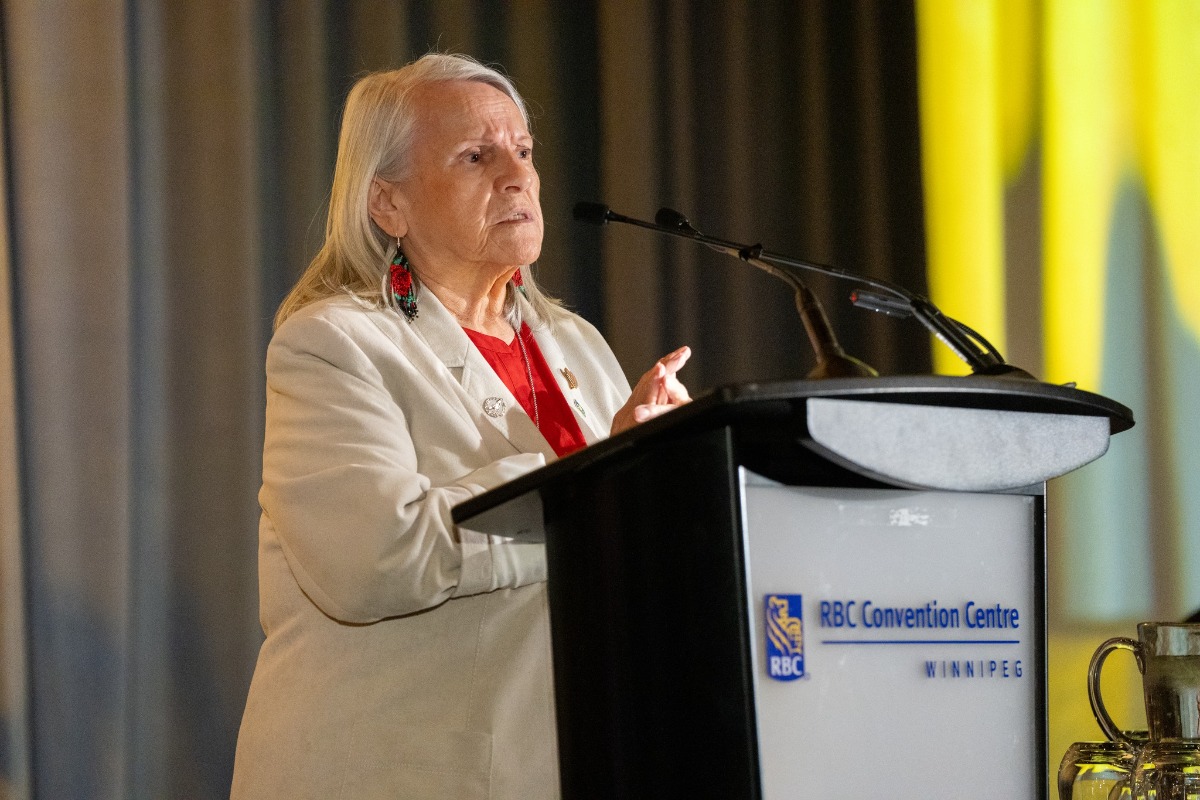
What does it mean to be a language keeper?
My first language is Anishinaabemowin. At age 6, I was sent to residential school and we were punished for speaking our language. I went home on weekends and summers, 10 years there. My mom and dad only spoke Anishinaabemowin. I am the oldest of 12 and we were able to keep our language.
As a young parent, we moved to the city, did not teach my language to my children. I regret this very much. Today, I realize how precious it is and must pass it on. I am not ashamed anymore of myself, my language and culture.
Why is language preservation important for Indigenous communities today?
We have an obligation to undo what was done to us. We were colonized. Learning our language is part of decolonization, we need to pass on as much of our cultural practices as much as we can for future generations.
What kind of language programming have you helped support with API and how have you seen these programs impact community members?
I speak my language whenever I can, use it in prayer/ smudging. I have been to Anishinaabe Pimadiziwin for weekly sessions with staff and children and have participated in cultural camp for families.
I also pass on our language at a Men's Group at Aboriginal Center weekly. I use flip charts, books and stories. Our prayers are also in Anishinaabemowin.
How can community members especially those who didn't grow up speaking the language begin or continue their language journey?
Anishinaabemowin is offered in several places now. It is written in books, it is offered at college and universities, degree courses. Technology also helps, videos, apps etc.
What gives you hope when it comes to the future of Anishinaabemowin?
We have young people who are trying to learn and it is now taught in schools everywhere, funding is available to promote our languages. Our language can be saved if we use it every day and every where that we can.
Is there a word, phrase or teaching in Anishinaabemowin that you carry with you?
I am happy to see you and happy for my life. I will see you again. Nii minawandim waabaminan, mino pimadizian. Gii gaa waabamin minawa. Miigwetch!